If you can't find what you are looking for in our regular collections,
submit a Special Request and let us cut / source it for you. You will be
notified by email if we find a gem that matches your specs.

Submit a Special Request and we will source the gem for you.
SUBMIT YOUR REQUEST HERE

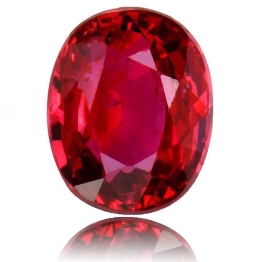
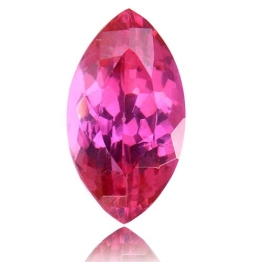
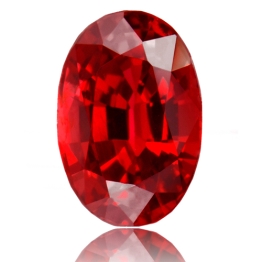
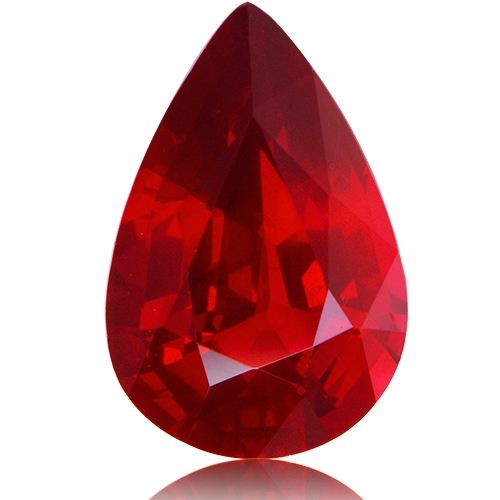
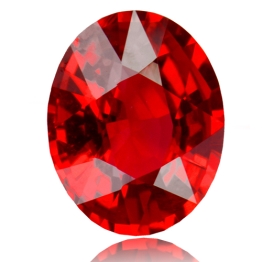
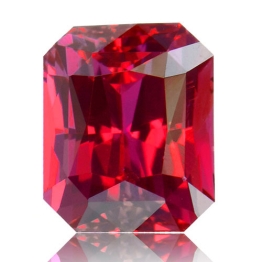
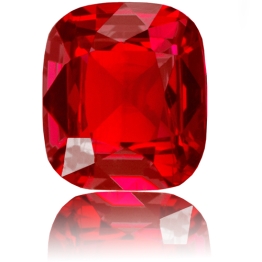
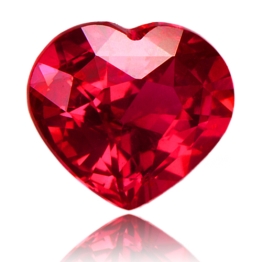
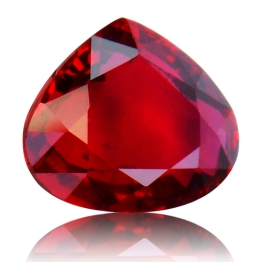
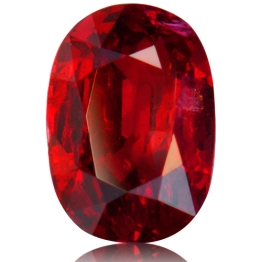
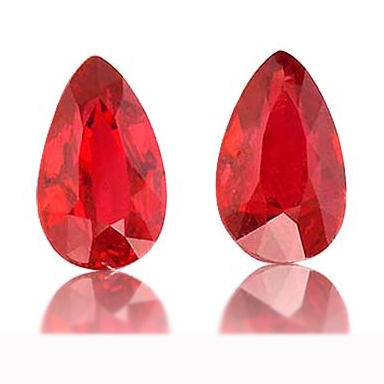
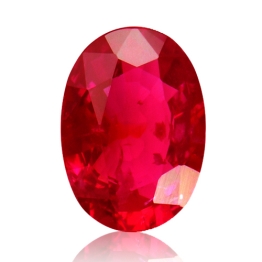
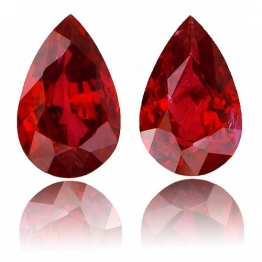
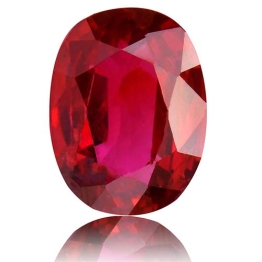
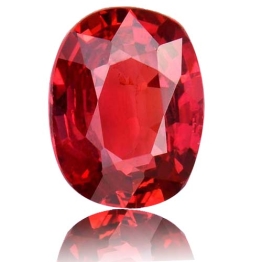
Ruby is the red variety of the species Corundum. Chemically, it is an aluminum oxide. Its name is derived from the Latin word for “Red” – “Ruber”. Trace elements of Chromium are the cause of the red color within corundum. All other colors of Corundum are called Sapphire. To be called Ruby, Corundum must exhibit a certain saturation of red otherwise it becomes Pink Sapphire. Ruby is one of the hardest gemstones with a rating of 9 on The Mohs Scale . It is also one of the world’s rarest gemstones in fine qualities.
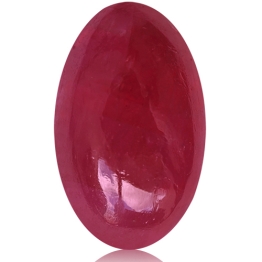
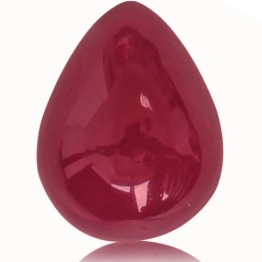
The value of Ruby is denoted by the 4 c’s of quality, just like Diamonds. Color is by far the most influential of these when it comes to judging quality in a Ruby. The more vivid and pure red a Ruby is, the more valuable. The renowned “pigeon’s blood” red colors mined in Mogok in Burma are considered the finest and most coveted and reach upwards of $100,000 per carat for the larger, finest pieces. However, in recent years a similar color has been discovered in the deposits of Mozambique which have transformed the Ruby market. These are much more affordable, selling for approximately 50% of the Burmese counterparts in their finest grades. Not all Ruby is valuable. Ruby can also sell for very little if it is of low quality or heavily treated. Low grade Cabochon cuts for example can sell as low as $10 per carat whereas as bead qualities sell for pennies on the dollar.
Ruby is mined in a number of locations in the world. Historically, the Mogok region of Myanmar (Burma) has produced the finest Rubies but in the past decade, production has tailed off. Mozambique is currently the foremost producer of fine Rubies. Other African countries also produce Ruby, specifically Tanzania Kenya and Madagascar. Some Ruby is also mined in Greenland, under the receding ice shelves and in Australia, India and Russia. However, Asia is still the continent that produces the majority of the world’s rubies with India, Nepal, Pakistan, Sri Lanka, Thailand and Cambodia all being producers. In fact, the formation of the Himalayan Mountain range was responsible for most of these deposits.
Value in Ruby, like all colored gemstones, is largely driven by color grade. The deeper, more vivid the color, the more valuable. With Ruby, an intense pure Red found in the finest Burmese Rubies is considered the most valuable in the trade. In the GIA color grading system, this is know as R 6/6 and is described as “Pigeon’s Blood Red”. Some Rubies currently mined in the Mozambique Montepuez district also has this color.
Ruby in its finest grades in larger sizes are extremely rare and cost much more than compareable Diamonds. By contrast, the lowest grade Rubies carry very little value and are traded by the ton in countries like India.
FEATURED IN


If you can't find what you are looking for in our regular collections,
submit a Special Request and let us cut / source it for you. You will be
notified by email if we find a gem that matches your specs.

Your Product has been successfully added to the cart.

Thank You for submitting a Special Request .
We will notify you by email when we find gems that match your specifications and may interest you.
You can see and manage your special requests in your account by loggin into your account and clicking on the link Special Requests.
MESSAGE SENT
We will respond shortly
FRIEND REFERRAL ADDED SUCCESSFULLY
Our system has opened them a Member's Account and sent them
an introduction email. If they purchase off the site, 6% of the sale
will automatically be credited to you EAG Account Statement
NO ITEMS FOUND WITH THAT ID